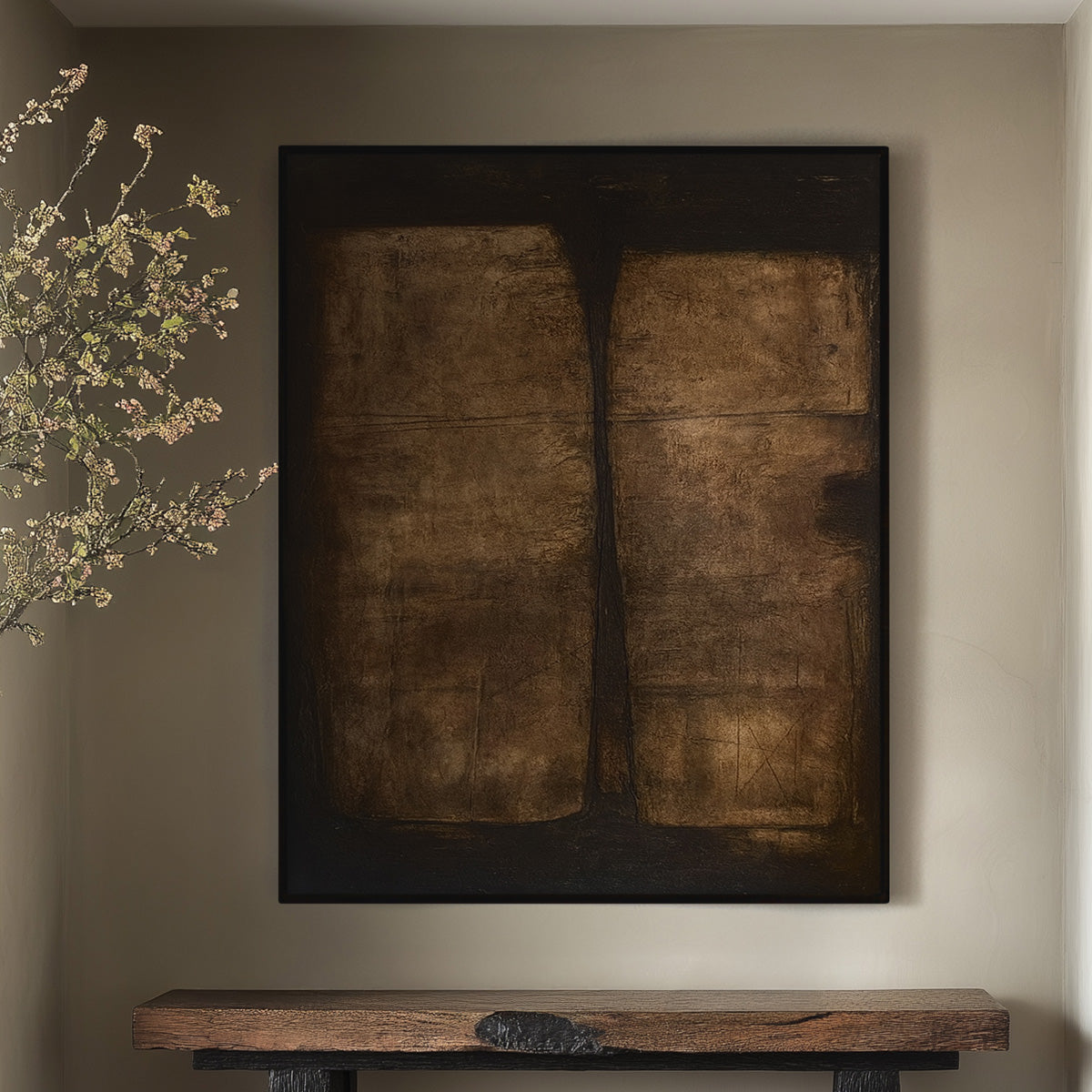

Why Wabi Sabi Wall Art Is Perfect for Modern Dubai Homes
The Honest Prints Journal · Wabi Sabi · Dubai interiors
A softer side of modern Dubai living.
In a city known for striking architecture and polished spaces, Wabi Sabi wall art offers a different kind of luxury: thoughtful simplicity, organic forms and the beauty of things that are not perfectly uniform.

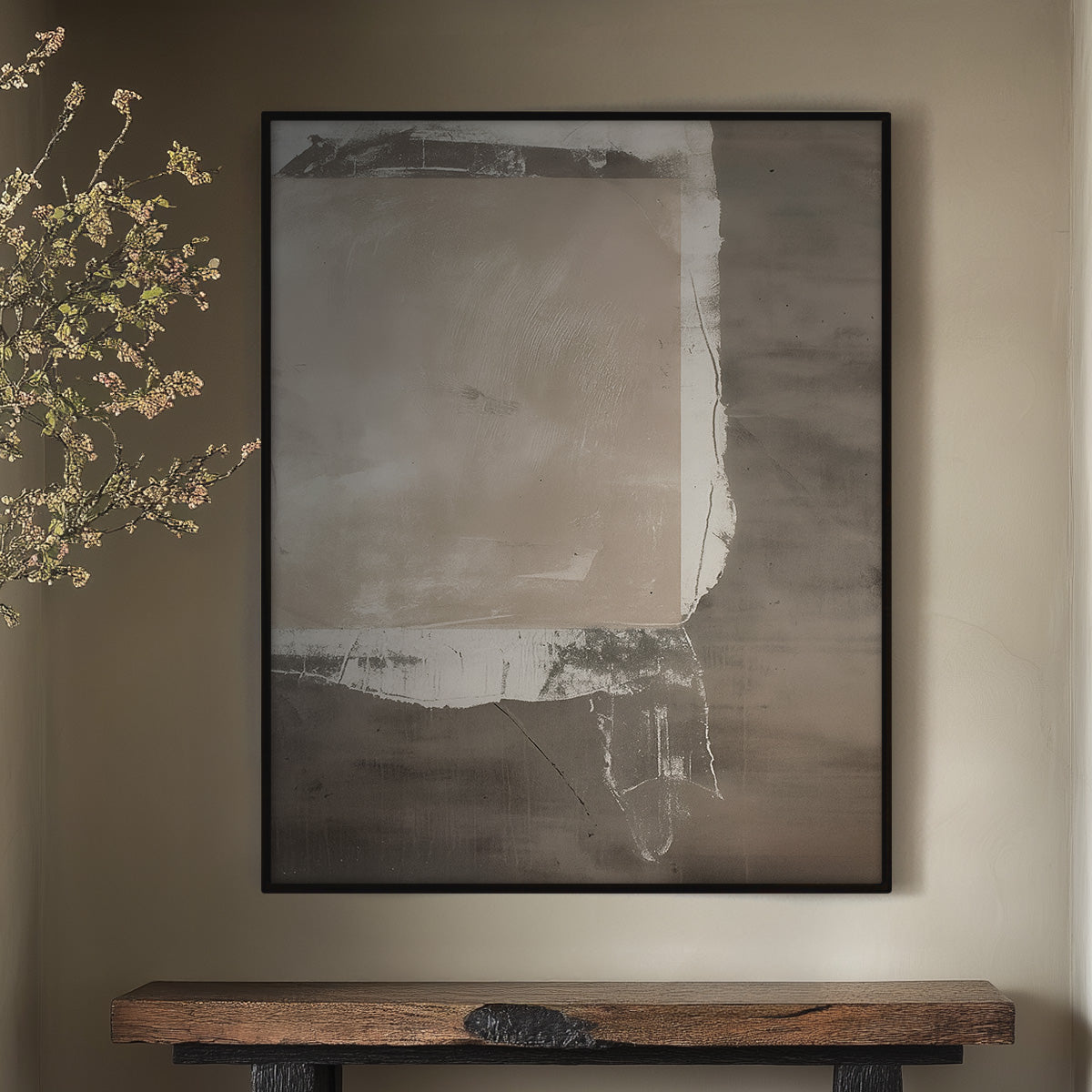
 Left: Earth Forms. Right: Wabi Horizon.
Why does it work?
Wabi Sabi wall art works particularly well in modern Dubai homes because its organic forms soften straight architectural lines, while restrained earth tones complement travertine, timber, linen and cream upholstery. For a compact apartment, one well-proportioned framed print creates a calm focal point; for a villa with a high wall, a larger canvas or framed print can add presence without visual clutter. The best choice depends on wall size, existing materials and the amount of contrast the room needs.
A philosophy that feels at home
Five reasons Wabi Sabi belongs in contemporary Dubai interiors.
Wabi Sabi is a Japanese aesthetic that appreciates simplicity, natural change and imperfect beauty. In wall art, that often translates into softened edges, asymmetry, muted colour and compositions that feel quietly expressive. The Honest Prints collection offers these designs as framed prints or framed canvas, with black, white and oak frame options.
01
It softens architectural precision
Full-height glazing, straight lines and sleek cabinetry are common features of modern homes. Art with irregular forms and gentle transitions provides a welcome counterpoint, making the space feel less formal and more lived in.
02
It elevates a neutral palette
Cream, greige, sand, taupe and warm stone provide an effortless foundation. Wabi Sabi art introduces subtle variations in tone and shape so a neutral room feels considered rather than empty.
03
It works with natural materials
Travertine, timber, linen, ceramics and textured upholstery pair naturally with artwork that suggests weathered surfaces and organic movement. The materials and the art feel connected without needing to match exactly.
04
It creates calm without disappearing
Minimal does not have to mean invisible. A carefully chosen large-scale piece can anchor a living room while retaining the quiet, spacious feeling that makes contemporary interiors inviting.
05
It moves beyond passing trends
Rather than relying on a bright seasonal colour or a highly decorative motif, its focus on restraint and balance makes it easy to style as furniture, finishes and everyday life evolve.
A practical Dubai home guide
Which Wabi Sabi artwork should you choose for your room?
Start with the actual space and the finish you already own. These examples are styling recommendations based on the palette and composition of works in our collection, not photographs of customers' homes.
For a beige living room
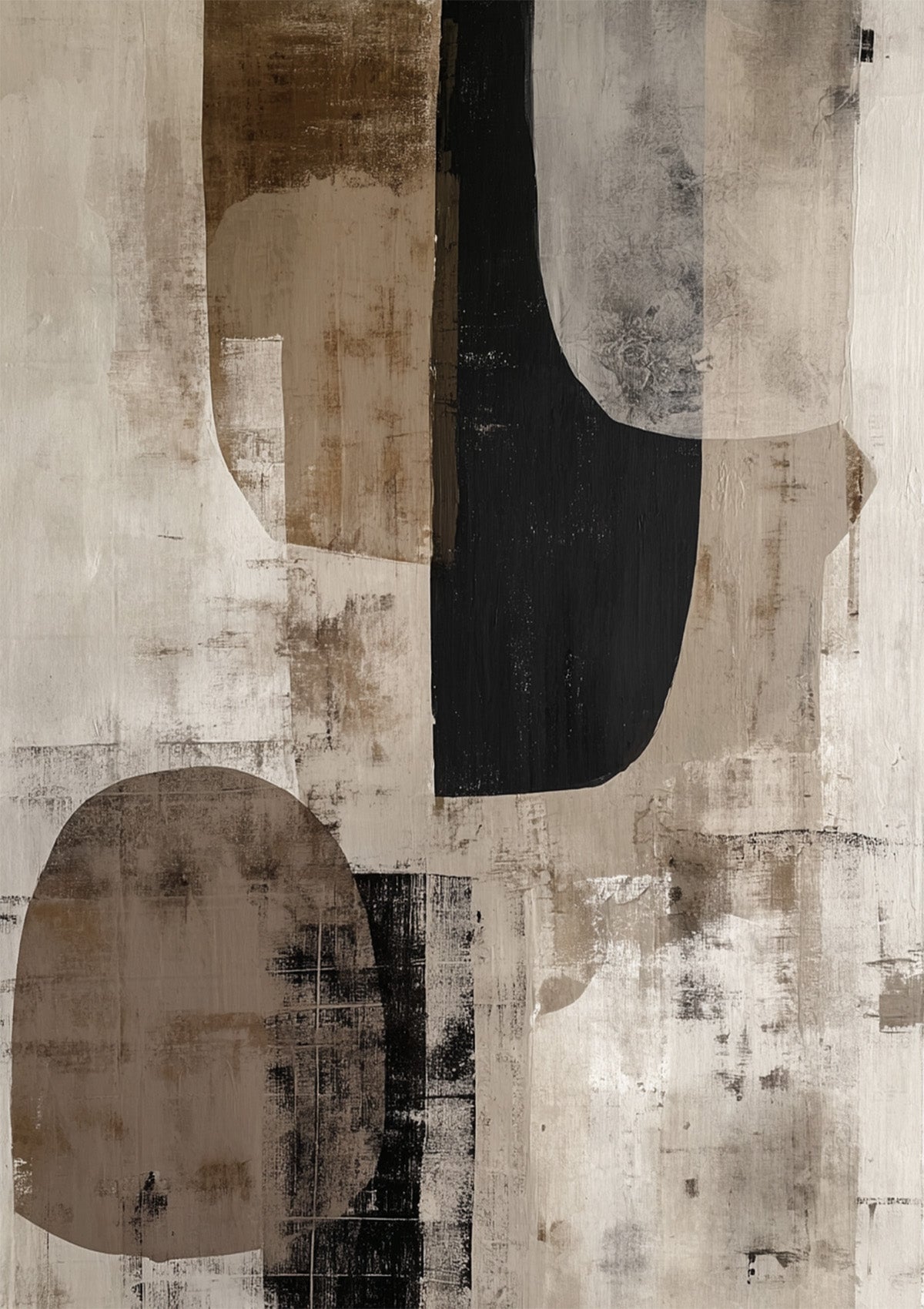
Choose Earth Forms when the sofa, rug and walls are all light. Its darker organic shapes provide definition while keeping the room in an earthy palette. Try an oak frame if the room already has warm timber.
For a minimal Dubai apartment
Choose Wabi Horizon if you want an understated centrepiece beside greige upholstery, pale stone or soft curtains. Keep neighbouring décor simple so the artwork has breathing space.
For a large villa wall
Look first at scale, then colour. Burnished Form adds deeper tonal contrast to high-ceilinged rooms. Check the actual wall dimensions and consider the larger sizes listed on the product page.
For a contemporary entrance
Choose Ink Harmony for a distinct focal point above a slim console. A black frame can connect its dark brush-like form to existing door hardware or lighting.
The visual balance
When everything is polished, let the artwork breathe.
A room filled with clean surfaces can benefit from something a little less exact. Consider an abstract composition with softly broken boundaries, washed neutrals or a single dark form against a quiet background.
The result is a focal point that draws the eye without demanding all the attention. That balance is especially appealing in open-plan Dubai living rooms, where the artwork may be visible from several angles.
Discover Wabi Horizon
From the Honest Prints collection
Six Wabi Sabi artworks, six different moods.
Every piece below is from the existing Honest Prints Wabi Sabi collection. Choose the feeling you want in the room first, then decide on size and finish.
For layered neutral rooms
Earth Forms
Organic shapes and deep, grounding contrasts for a living room with personality.
View artwork
For serene contemporary spaces
Wabi Horizon
Soft blocks of colour and visual texture that sit naturally with stone and linen.
View artwork
For a richer, darker palette
Burnished Form
Deep bronze-brown tones add warmth and presence to a sophisticated interior.
View artwork
For calm with a dramatic edge
Ink Harmony
An expressive black form gives a pared-back room definition and contrast.
View artwork
For black and white schemes
Shadow Form
Layered silhouettes suit clean-lined furniture and architectural spaces.
View artwork
For subtle colour
Indigo Solace
Quiet blue-grey movement for spaces that need a gentle departure from beige.
View artwork
How these six artworks were selected
Our editorial selection compares the actual works in the Honest Prints Wabi Sabi collection by colour temperature, dark-to-light contrast, composition and likely room use. Product images are artwork files and styled mockups from our website. They illustrate placement, not a guarantee of scale in your home; always measure the wall and check available product variants.
Not every wall needs more. Sometimes it needs one piece with room to breathe.
Room by room
How to style Wabi Sabi wall art in your Dubai home.
The goal is not to turn every room into a Japanese-inspired interior. It is to bring the philosophy of restraint into the space you already have.

01 / Apartment living room
One focal point, less visual noise.
Above a sofa or low console, choose one generous piece rather than several small competing works. Monochrome Flow can bring structure to soft, neutral furniture.

02 / Villa entrance
Make an understated arrival.
Pair a piece with strong organic contrast, such as Ink Harmony, with a simple console, ceramic vessel and warm light. Let the artwork provide most of the expression.

03 / Bedroom or reading corner
Keep the atmosphere restorative.
Use softer hues and generous empty space around the artwork. Indigo Solace adds a subtle blue-grey note without overwhelming the room.
The details matter
How large should Wabi Sabi wall art be?
Scale makes the difference between an artwork that feels intentional and one that looks lost on a wall. This is especially relevant in Dubai villas with tall ceilings and apartments with wide sofa walls.
As a starting point, aim for a single work or a pair with a combined width of roughly 60–75% of the furniture beneath it. For example, above a 220 cm sofa, that is approximately 132–165 cm in total artwork width. This is a design starting point, not a rule: wall height, orientation and neighbouring furniture still matter.
On the Honest Prints product pages checked for this guide, listed portrait-size options run from 30 × 40 cm to 150 × 200 cm, including 75 × 105 cm and 100 × 140 cm. Check each live product page for current size and material availability. A tall portrait piece is not automatically wide enough for every sofa wall.
Above a sofa
Try one substantial piece or a balanced pair, leaving approximately 15–25 cm between the sofa back and the bottom of the frame.
In an entrance
Choose a portrait composition that has enough negative space around it to stand apart from doors, switches and nearby furniture.
At eye level
For a wall without furniture underneath, a centre point around 145–155 cm from the floor is a useful starting point. Adjust for the room.
Near large windows
Consider how direct light reaches the wall during the day. Minimise prolonged direct sunlight to help preserve artwork and maintain comfortable viewing.
Before you order
Three details that make Wabi Sabi art look intentional.
Wabi Sabi is not simply choosing the palest artwork. Proportion, surface and contrast are what make it work in a real Dubai living space.
01 / Contrast
Avoid matching every shade.
On an all-cream wall, use an artwork with a charcoal or brown element. Earth Forms is one way to add contrast without using bright colour.
02 / Scale
Measure the wall first.
Large Dubai villas often need bolder dimensions than a compact apartment. Use the furniture width and ceiling height to judge whether a single portrait work or a pair will feel balanced.
03 / Surface
Know what you are buying.
Marks that look textured in a Wabi Sabi image may be visual details in a print. A canvas has its own fabric surface; neither finish should be described as hand-painted relief unless explicitly specified.
Collection and material references reflect the product information reviewed for this guide. Final sizes, frames, mounts and materials should always be confirmed on the product page before purchase.
Finish and framing
Framed print or framed canvas?
Both can suit the Wabi Sabi aesthetic. The best choice is the finish that supports the room, not the one that makes the most noise.
For precise, modern interiors
Framed fine art print
A clean, architectural presentation that feels natural alongside smooth walls, tailored upholstery and contemporary cabinetry. Honest Prints lists oak, black and white frame options on its product pages, with a mount/passepartout choice for prints. Oak adds warmth; black creates definition; a mount gives the composition extra breathing room.
For a softer, substantial presence
Framed canvas
A canvas substrate can give the image a different physical presence on the wall, particularly at larger sizes. Printed artwork with a textured-looking design should not be confused with an original, hand-painted or raised-texture painting. Choose according to the look and finish you prefer.
Frequently asked questions
Wabi Sabi wall art in Dubai: the essentials.
What is Wabi Sabi wall art?
Wabi Sabi wall art draws on a Japanese aesthetic that appreciates simplicity, imperfection, natural change and restraint. It often features asymmetry, muted palettes, organic shapes and visual texture rather than glossy perfection or elaborate decoration.
Does Wabi Sabi wall art suit luxury Dubai interiors?
Yes. Its understated forms can work particularly well alongside natural stone, timber, minimalist furniture and generously proportioned rooms. Wabi Sabi art offers a quieter interpretation of luxury rather than competing with the room's architecture.
What colours work best for Wabi Sabi wall art?
Warm white, charcoal, stone grey, taupe, sand, clay and earthy brown are versatile choices. Muted blue-grey can work as a restrained accent. Look at your flooring and largest furniture pieces before deciding on the palette.
Can I use Wabi Sabi wall art in a small Dubai apartment?
Absolutely. A single well-sized piece can make a compact room feel more considered than a crowded arrangement of small frames. Use negative space and a limited palette to keep the result calm.
Should I choose an oak, white or black frame?
Oak usually adds warmth alongside timber, linen and natural finishes. Black provides strong contrast and works well in monochrome interiors. White can be useful when you want the frame to recede against a light-coloured wall. The right choice depends on the artwork and the room.
Is Wabi Sabi the same as Japandi?
Not exactly. Wabi Sabi is a Japanese aesthetic focused on imperfect beauty and the passage of time. Japandi is a contemporary interior design blend drawing from Japanese and Scandinavian influences. They share an appreciation for simplicity, natural materials and restraint, so Wabi Sabi art can fit beautifully in a Japandi-inspired home.
Are Wabi Sabi prints physically textured?
Not necessarily. Artwork can depict brush marks, worn surfaces or layered material while remaining a flat printed image. A canvas print uses a canvas surface, but that does not mean the artwork has raised paint. Check the selected product finish before ordering.
Which Wabi Sabi artwork suits a beige sofa and cream walls?
Look for contrast rather than another nearly identical beige tone. Earth Forms introduces charcoal and earth-coloured shapes; Burnished Form is an option if you prefer deeper browns. Both can add definition to a pale Dubai living room without changing the overall neutral palette.
What size Wabi Sabi art works above a 220 cm sofa?
A common styling starting point is artwork totalling around 132–165 cm in width, approximately 60–75% of the sofa width. A single suitably wide piece or two coordinated prints can work, but you should also account for the wall height and orientation. Check the actual dimensions of each Honest Prints size option.
What kind of wall art works in a high-ceilinged Dubai villa?
A large-scale piece with a simple composition and enough tonal contrast is often more effective than several small works. Try Burnished Form for warmth or Ink Harmony for strong organic contrast, then select dimensions that suit the available wall height and furniture scale.
Where can I buy Wabi Sabi framed prints and canvas art in Dubai?
Explore the Honest Prints Wabi Sabi wall art collection for framed prints and framed canvas options. Honest Prints is based in Dubai and offers delivery across the UAE.
Honest Prints · Dubai, UAE
Choose art that makes your space feel like yours.
Explore abstract Wabi Sabi artwork in soft neutrals, grounded earth tones and expressive monochrome. Find the piece that works with your home, your furniture and the way you want the room to feel.
Shop Wabi Sabi Wall Art Honest Prints Editorial · Artwork and product details sourced from the Honest Prints collection.